
In the evolving landscape of dermocosmetics, the intersection of clinical efficacy and cosmetic elegance is where true innovation lies. For decades, the infamous white cast of traditional UV filters has acted as a barrier to daily compliance. Today, the rise of sunscreen serums is revolutionizing that discourse. Consumers and dermatologists alike are moving away from heavy creams and embracing lightweight, hybrid formulas that offer broad-spectrum protection while functioning as a delivery system for active skin health.
In this session of the Science of Beauty masterclass, we delve into the core formulation principles of a 21st-century sunscreen serum. From the hierarchy of dermatological textures to the science behind the 500 Dalton rule, discover what it takes to engineer a gold-standard SPF that repairs the skin barrier while providing an immaculate, makeup-ready finish.
Clinical Breakdown: The Dermatological Science of Sunscreen Serums
Welcome back to Dermatologist Talks: Skin Care Science. I’m your host, board-certified dermatologist Dr. Teo Wan Lin. I want to share a little bit today about sunscreen serums. We have often heard that sunscreen is the critical skincare step that helps to arrest aging, primarily because of its ability to block UV rays. What I’m proposing is a revolutionary shift in terms of how we view sun protection. Sun protection on its own has moved far beyond the concept of merely performing the basic function of blocking UV radiation. Its broad-spectrum applications encompass UVA and UVB rays—and actual skin rejuvenating benefits.
When formulated correctly, your sunscreen goes beyond just a simple tool for preventing sun damage to actually becoming a core part of your skincare routine that works in the same way your serums or even moisturizers would.
How I want to position today’s masterclass is more along the lines of how we plan to navigate this new category of sunscreens that are increasingly described as sunscreen serums. In Asian beauty, multifunctional skincare products and even makeup are a core part of the product offerings. This concept that you should apply a single skincare product as a rigid fixed part of your three-step or four-step or five-step skincare routine is kind of outdated, and there are actually ways to hack a skincare routine, so to speak, but that requires us to really understand what goes into the formulation for products.
Sunscreen with Skincare Benefits? Texture first.
Before evaluating a sunscreen objectively for skincare benefits, I would first prioritize the aesthetic/cosmetic properties of the sunscreen. Traditionally, sunscreens have been critiqued, especially in the Asian population and skin of color, as essentially being a little bit too aesthetically jarring because it tends to leave a white cast—and this is especially true for those that are formulated for the Western Hemisphere. And that’s where the rise of K-beauty and even C-beauty or J-beauty has begun to revolutionize the discourse.
How it looks on your skin definitely affects the psychology of the user. So, you can have the best sunscreen in the world—the highest SPF, you can have broad-spectrum coverage—but if it looks like, you know, a mess on skin, then you’re going to be hard-pressed to find someone who is willing to apply it under their makeup. Consequently, a lot of the science that goes into formulating sunscreen actually ends up in the realm of the cosmetic acceptability of the product.
Beyond Cosmetic Elegance: UVA, UVB, and Collagen Defense
So, let’s recapitulate. If the sunscreen doesn’t look natural on your skin, no matter how potent it is or how efficacious it is, you’re not going to convince anyone to wear it under makeup or on its own. And that also means that if it tends to pill, then it’s also not going to be widely accepted. Now, suppose we go past that barrier and we’re now moving on to what’s actually in the sunscreen. So, we’re well aware that there are chemical and physical blockers, and these have specific roles in terms of addressing UVA and UVB. So, UVA tends to penetrate a little bit deeper into the level of the dermis, where you can get damage to collagen. And, you know, when we talk about hyperpigmentation, irregular skin tone, the development of superficial wrinkles, we’re also concerned about what UVB is doing on the skin’s surface.
Sunscreen Formulation 101: Serum, Lotion, Ointment? What’s the difference?
So, functionality of sunscreen aside, we now want to zoom into what other active ingredients can be incorporated into what I now call skin-care sunscreen that’s also skincare. It can also be understood more readily in terms of the format it usually comes in, and that is in a serum format. So, what differentiates a serum from an emulsion or like a cream or an ointment? Now, that goes to the core of dermatologic therapeutics.
In dermatology, we use these terms to describe the texture of the product, also understood as the viscosity of the product. So, if you’re used to a multi-step skincare routine, you understand that the lightest-weight products go on first. So, you have—typically, you have your facial mist, which also can be used after makeup, but that’s an exception, of course. You’ve got the serums, which are purely water-based and may have some element of viscosity in the case of hyaluronic acid, which is inherently part of the formulation; it is a humectant, which means that it forms a layer on the surface of your skin, trapping moisture under it.
Decoding Skincare Textures: Lotions, Creams, and Emulsions
And then we move on to lightweight moisturizers or lotions, which are very popular in tropical climates or in high humidity, like in Southeast Asia. These are a mixture of water and cream or ointment formulas. So, essentially, it’s best thought of as water-in-oil formulations. And if you find that your day moisturizer adheres very nicely on your skin, it doesn’t cause a thick, sticky sensation, it’s really because it’s formulated as an emulsion; it’s water-based. So, there’s much more water than there is oil.
Next, we move on to creams, which have a high proportion of oil compared to water, compared to lotion formulations. And then you have the ointment formulations, which are predominantly oil-based. Paraffin, for example, would count as an ointment, and these work particularly well in those with very dry skin as these prevent transepidermal water loss.
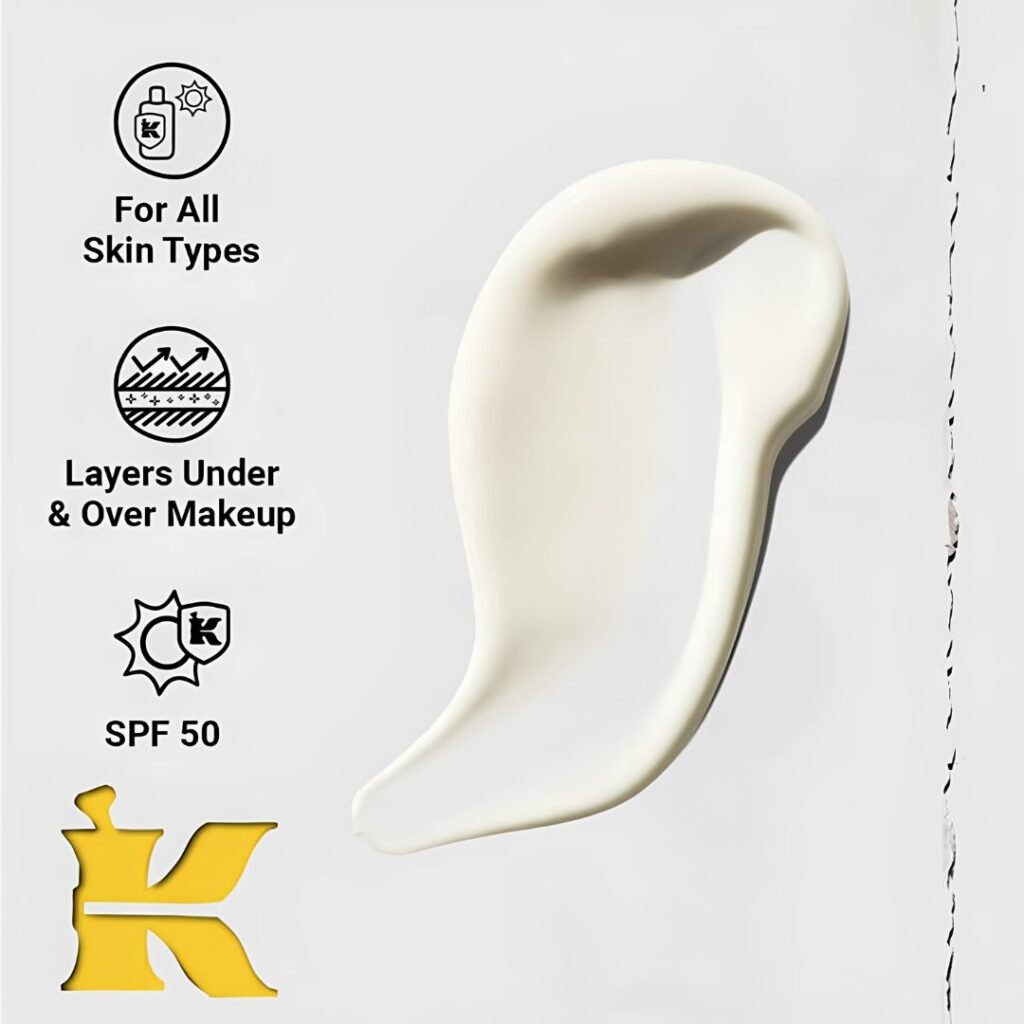
So, where does the ideal sunscreen formulation sit in the spectrum of what we’ve discussed? In terms of texture, we are ideally looking at a lotion. And if we are veering more towards the functional properties of the sunscreen, then it can actually be accurately described as a serum-lotion sort of formulation. And banking on the cosmetic acceptability of serums—meaning that we know these are readily absorbed once applied, they go well under makeup—then it becomes a very cohesive sort of 21st-century sunscreen formulation that I would recommend.
Evaluating Sunscreen Functionality: Supercharged with Collagen Peptides
Functionally, I want to delve into how collagen peptides are well known when formulated in their specific molecular form that is designed to penetrate the skin barrier can be effectively incorporated into sunscreens. We know about the 500 Dalton rule, which means that the basic law of topical therapeutics is that it has to penetrate the stratum corneum, which is also the key principle behind what defines a cosmeceutical product or a dermocosmetic product. Other actives: emollients—you know, we have very lightweight emollients such as hyaluronic acid, ceramides—you can also incorporate antioxidants, for instance, into your sunscreen serum formula.
The Gold Standard: Advanced UV Filtration and Messenger Peptides
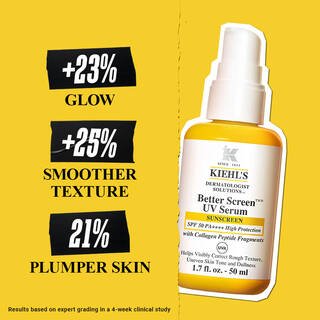
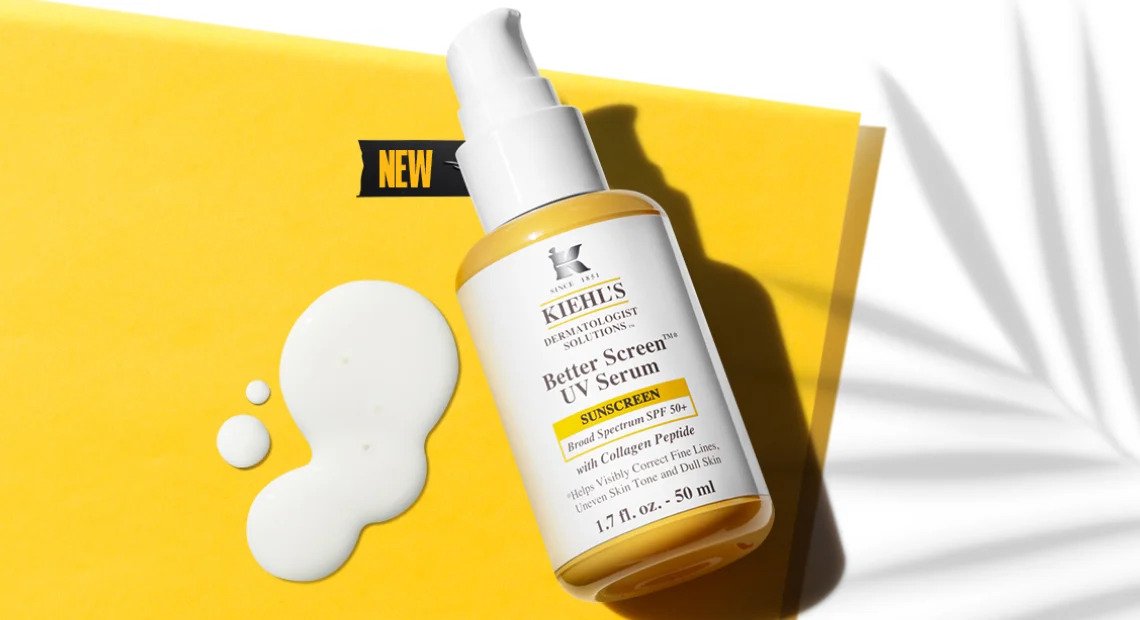
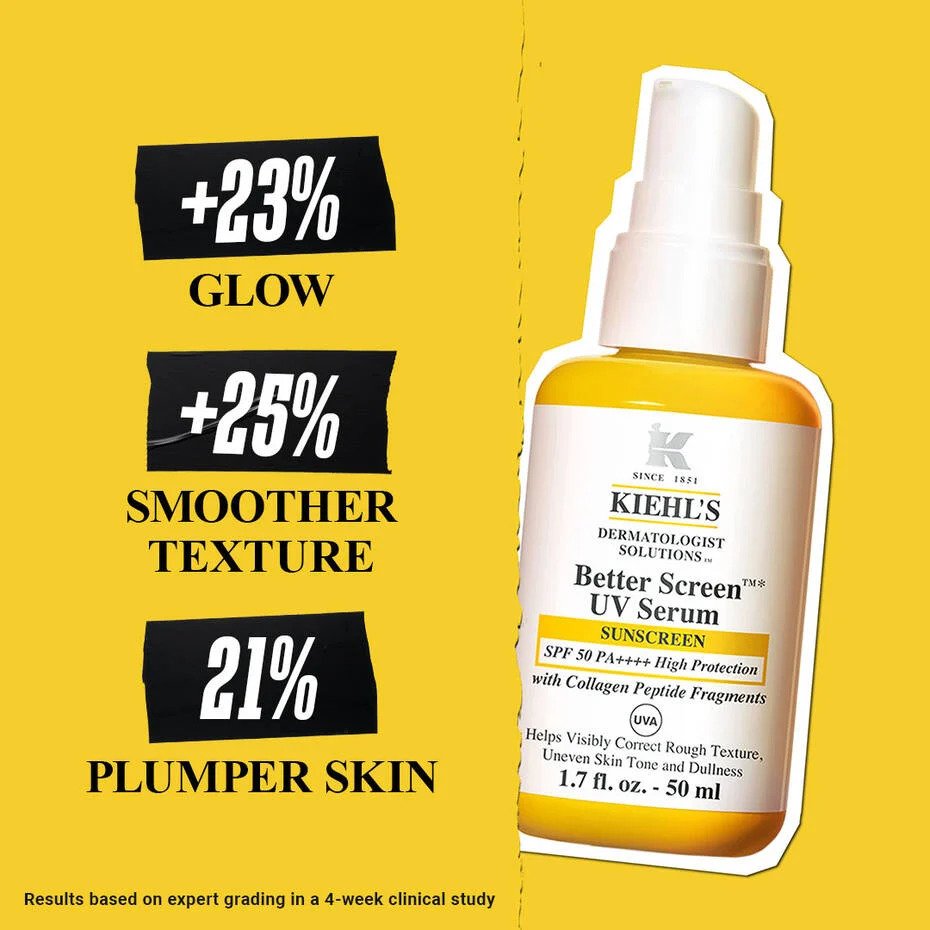
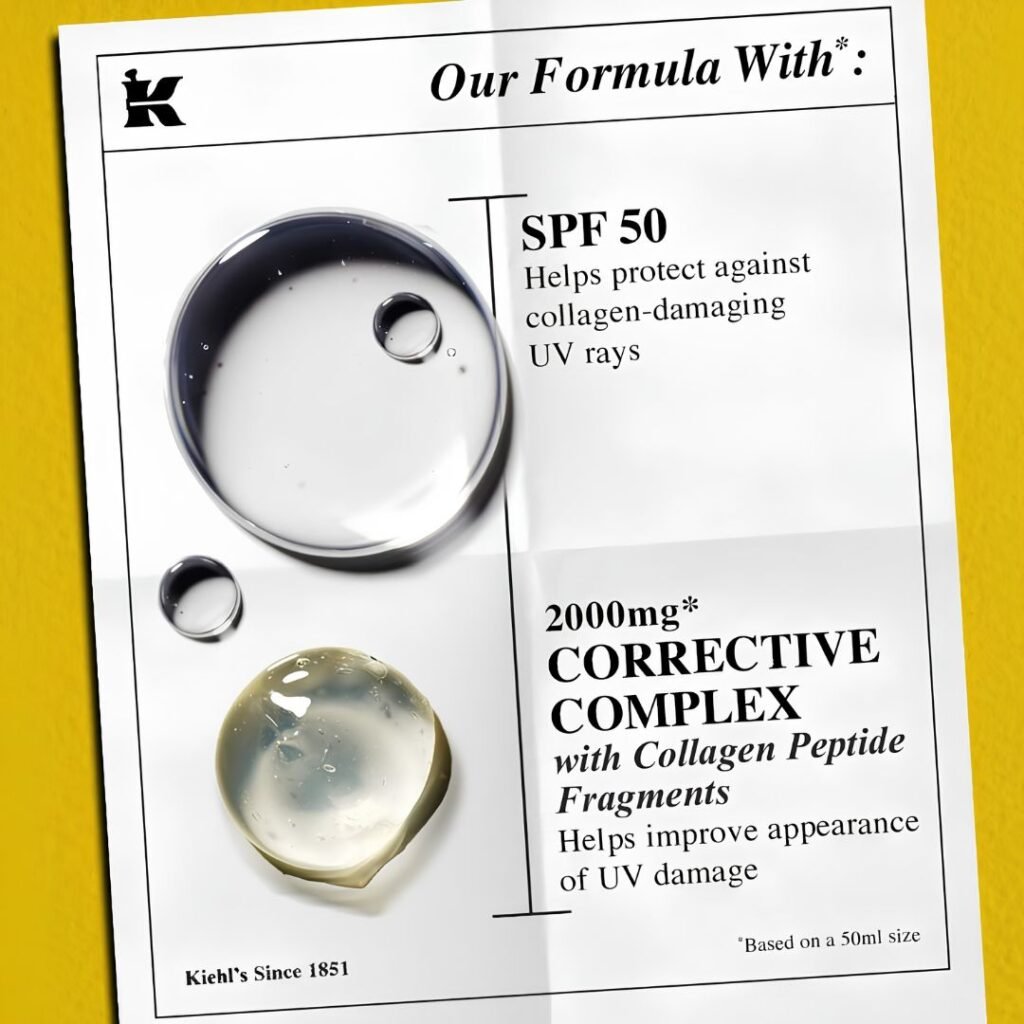
This podcast episode is brought to you by Kiehl’s, who with their latest sunscreen serum have mastered the key formulation principles of a gold standard serum sunscreen. The formula encompasses advanced UV filtration that tackles both UVA and UVB with advanced technology, creating a photostable filter that excels at absorbing UVA radiation—the primary driver of hyperpigmentation and superficial skin wrinkles.
Additionally, the serum also incorporates palmitoyl tripeptide-1 and palmitoyl tetrapeptide-7, which are essentially messenger peptides involved in cell signaling. Now, what they actually do in the skin is to generate new collagen and also stimulate the body’s own natural reserve of hyaluronic acid. Several peer-reviewed studies have shown that these specific peptides significantly reduce the appearance of fine lines by reinforcing the integrity of the dermal matrix.
Now, finally, tocopherol, or vitamin E, acts as a potent scavenger for free radicals that are triggered off by UV sun damage. The humectants and emollients present in the formula include glycerin, propanediol, and sodium hyaluronate, which function as humectants that trap moisture on the skin surface to prevent transepidermal water loss and to enhance barrier integrity.
The Dermatologist’s Gold Standard for SPF
So, what we’ve learned from today’s masterclass is that the ideal sunscreen functions as a total delivery system for skin health by first combining broad-spectrum filters with clinically proven actives like collagen peptides and antioxidants in a cosmetically acceptable format such as a lightweight serum lotion. We actually find ourselves with a gold standard product that represents what dermatologists are always looking for when it comes to skin health, which is high efficacy topicals paired with maximum cosmetic elegance.
I hope you’ve enjoyed today’s deep dive into the science behind sunscreens. Today’s episode is proudly brought to you by Kiehl’s. You may visit the link to find out more about their latest sunscreen serum. Till the next episode.
Editorial Takeaway: Why Sunscreen Serums is the New Gold Standard
The shift from a simple functional block to sophisticated sunscreen serums marks a vital step forward in clinical skincare. The true marker of a modern dermocosmetic lies in its ability to respect the stratum corneum. By leveraging the 500 Dalton rule, high-performance serum-lotions can effectively bypass the skin barrier to deliver clinical actives—like messenger peptides and vital antioxidants—exactly where they are needed most to combat UV-induced photoaging.
Ultimately, the best UV protection is the one that prioritizes both cosmetic elegance and active skin repair. A well-formulated sunscreen serum bridges the gap between rigorous lab science and the daily luxury of a lightweight, highly wearable routine.
(For more information on the peptide-infused SPF discussed in today’s deep dive, visit Kiehl’s to explore their latest advancements in UV filtration and sunscreen serum technology.)